
ReportNextUp '26
Parents Are the Customer. Three Operators on How to Lead Them Anyway.
Erika Badan, the Red Bulls' David Jervis and Next Level's Lance Smith on surveys, office hours, 48-hour weather notices, the Starbucks problem, and when to tell a family this isn't the place for you. Plus BrainPOP's CEO on what coaches can borrow from teachers.
Reported at LeagueApps' NextUp '26 Youth Sports Conference · Oct. 14, 2026 · Civic Hall, Union Square
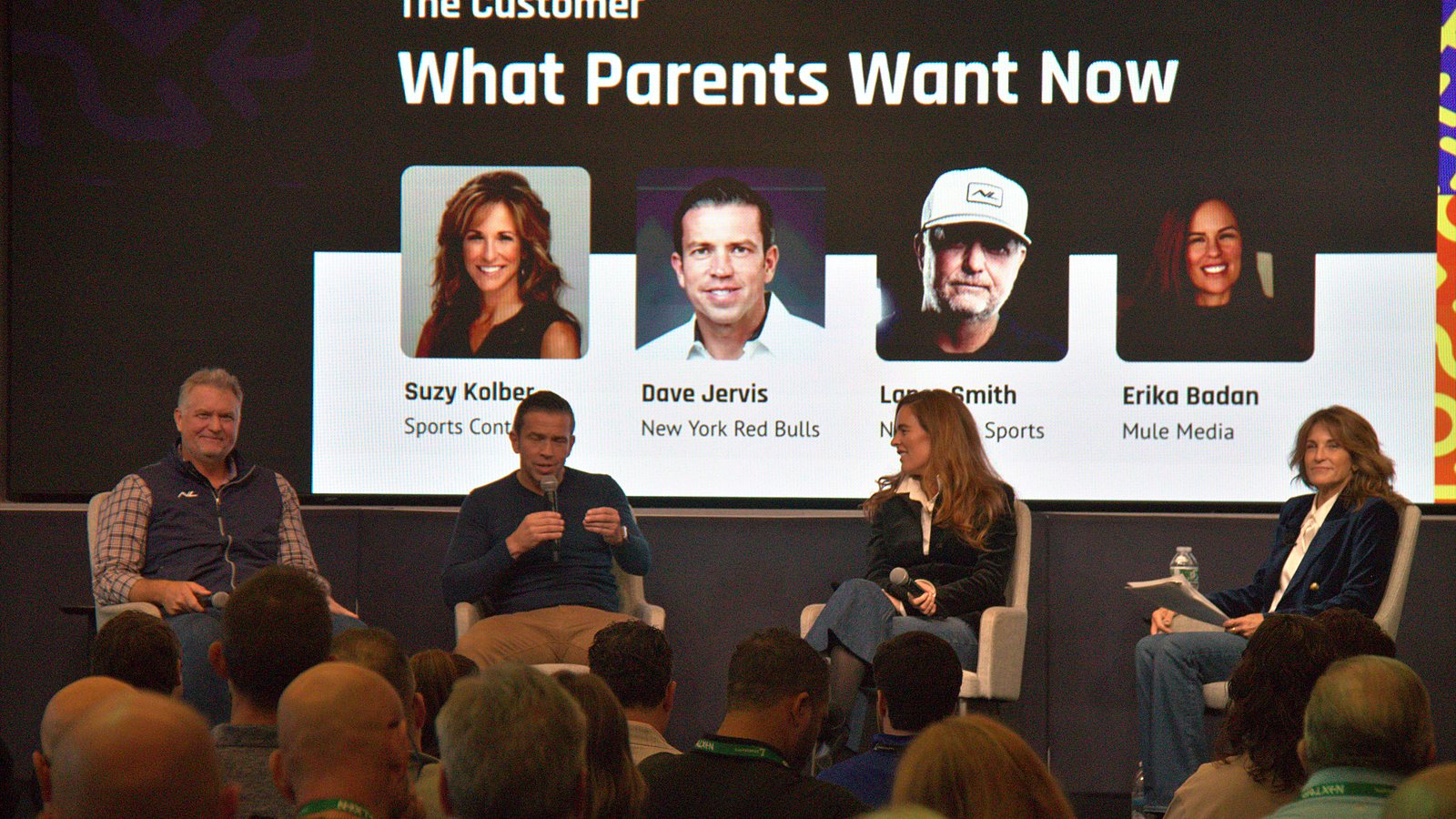
On stage: Erika Badan, founder, Mule Media, and former CEO, Barstool Sports · David Jervis, head of youth programs, New York Red Bulls · Lance Smith, co-founder and CEO, Next Level Sports · Host: Suzy Kolber · Then Lorin Thomas-Tavel, CEO, BrainPOP, in conversation with Kolber
The host's story
Kolber set it up as a parent. A single mom in a demanding job, she drove an hour and ten minutes to Rhode Island so her daughter could play travel softball, until high school coaches made clear she couldn't do both. "It really crushed her love of softball." Her daughter found volleyball instead, set for a state champion as a junior, went undefeated as a senior and plays in college. Along the way, Kolber said, she learned what separates a good experience from a bad one: coaching and communication.
Partners, general managers and a pain in the ass
Jervis's Red Bulls youth ecosystem has more than 30,000 families, and it calls them partners. Parents arrive at three developmental stages, he said, and at the rec level they want fun, learning and safety. "It's when they get to the competitive side of it that it becomes crazy," driven by the fear of missing out on what other parents are doing. The job is aligning expectations.
Smith's model is different: Next Level's coaches are high school and college student-athletes, and the parent is "a general manager" who helps orchestrate the kindergartners and second graders while the young coaches coach. The lines are abundantly clear. If a parent challenges a 16-year-old coach, "there's no question. You're out." Kids first, student-athletes second, parents last, "and that's not to say that we don't care. They're swiping the credit card."
Badan, the parent on the panel, was blunt: "Parents are crazy. They're a pain in the ass." But she pointed at something operators don't say out loud. Parents are decreasingly able to discipline their kids or be hard on them, so sports has become one of the only places a kid gets a hard lesson, "and the boulder rolls downhill" onto the operator. Learning to lose, to sit, to be mad: those are the lessons that matter when the kid applies for a job. "I want the kid who's scraping to play sports, not the kid whose dad wants to talk to the recruiter."
Stay local
Travel is where expectations go off the rails, Jervis said. Twenty years ago teams in New Jersey rarely left the state; now the bigger tournament is assumed to be the better competition, and U.S. Soccer is pushing to make competition local again. Travel can be great socially, but operators at the top levels have a responsibility to tell parents they don't have to fly three hours to find it. The measure of a successful program isn't trophies; it's whether kids are still playing at 15 and 16, when dropout at 12 and 13 is driven mostly by competition. Even at Red Bulls, with an academy and a first team averaging about 22 years old, only a small percentage go pro.
Smith's version is the Starbucks problem. If they put too much foam in your latte, they remake it. "You don't get to do that with kids." Families on their third straight weekend at a Best Western chasing a championship are consumers under duress, and the escalation follows. Next Level's answer is to stay local by design.
Communication, with numbers
Jervis's system runs on a calendar: a virtual open house before registration, an onboarding with every parent, a mid-season check-in, end-of-season assessments for every player so no one learns of a team move two weeks after the season, then a survey. "Most importantly, we follow up on every single piece of feedback," ideally within 24 to 48 hours, when the problem is smaller than it will be a week later. Weather notices go out 48 hours ahead. For conflict, pick up the phone: "Four out of five times, the parent will roll back." Five to ten minutes, 30 if it's dramatic, and software now routes all of it into one system.
Smith asked operators to raise a hand if they survey their parents. About half did. If you don't run an NPS score, he said, start, "and if you don't know what an NPS score is, go to ChatGPT." The gap between what parents expect and what you offer is where the problems live, and you can't know what happened in a household that day.
Badan treats it like any consumer business: frequency, nature and type of communication, and segmentation. The mom group chat is "a whirling dervish of unproductive bitching," and moms are right to complain, so give them a place to do it: every other Thursday, office hours, anyone can come. Build a different communication plan for each parent archetype, the aggro one at every practice and the always-five-minutes-late one. Is there such a thing as too much communication? "Not to a parent," she said.
Boundaries
Smith's customer service team gets attacked, so it works from a scarcity model. Next Level doesn't have unlimited spots, and sometimes you look at a parent and say "this isn't the place for you. And it's okay." His site directors can refund a $250 to $300 program on the spot and point the family to the exit. The flip side is passion: "We love it when kids cry at the end of the season," because every program ends with a last game won or lost, and that's life. Jervis: it shouldn't be a job for the kid or the parent. Badan: it's the least fun for parents of anyone in the equation, and the operator who makes it fun for them wins.
One action for tomorrow
Badan: stop assuming parents know what they're doing, because they don't, and it's intimidating. Jervis: the parent is a partner, and they spend far more time with the kid than the coach does; lose the parent and you lose the kid. Smith: open the lines of communication and draw the boundary lines at the same time.
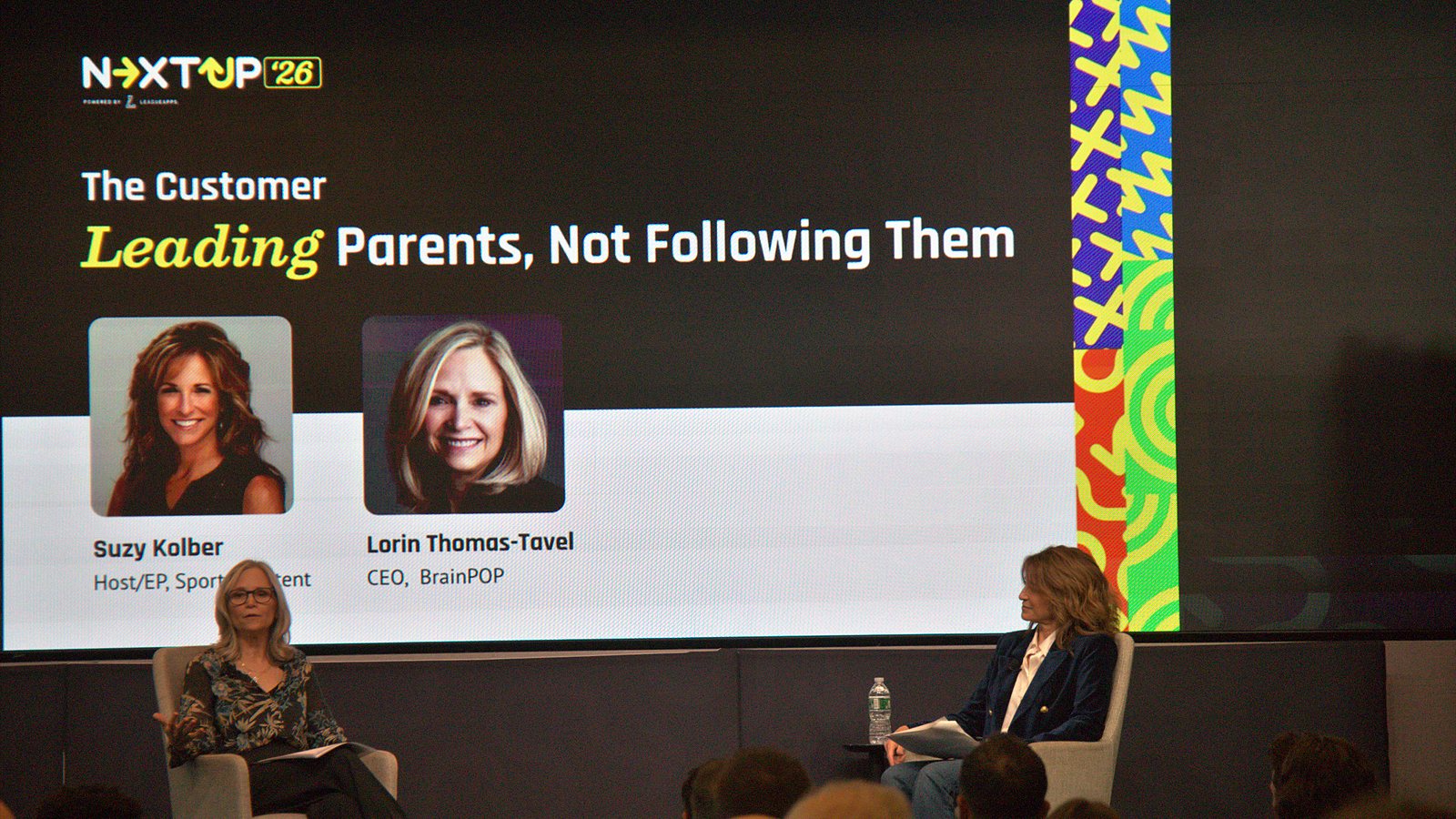
What coaches can borrow from teachers
Thomas-Tavel, who ran a network of virtual schools serving about 125,000 students before BrainPOP, and whose three kids had three different sports experiences, said education and youth sports are the same business: "The job to be done is to create better humans in the world," through the same parents, the same equity and funding issues, and the same private capital. Both are development-pathways businesses; nobody wins in one season. Three things transfer. Back-to-school night, the one evening a year when the teacher tells parents what's expected of them. A curriculum, the scope and sequence that tells a child, a parent and a coach exactly what this year is supposed to build, which she thinks a league could set across clubs. And visible progress, reported the way schools report it, not just playing time. What sports teach, she said, are what educators call durable skills: communication, creativity, curiosity, critical thinking.
The Coach's Board take
Jervis's calendar is the model: open house, onboarding, mid-season check-in, assessments, survey, every piece of feedback answered within 48 hours. That's six touchpoints a season, and most clubs we know do two. Add Badan's office hours and Thomas-Tavel's one-page curriculum for each age group, and most of the group-chat problem goes away before it starts.
Free. Join the founders, operators and coaches building youth sports.