ReportNextUp '26
LeagueApps' Map of Youth Sports: Eight Kinds of Organizations, One Business Problem
The headlines say youth sports is too expensive, too investor-driven and unsafe. Brian Litvack and Jeremy Goldberg opened NextUp '26 with a different read: the U.S. underinvests, the system is the most fragmented in the world, and most "sports problems" are business problems.
Reported at LeagueApps' NextUp '26 Youth Sports Conference · Oct. 14, 2026 · Civic Hall, Union Square
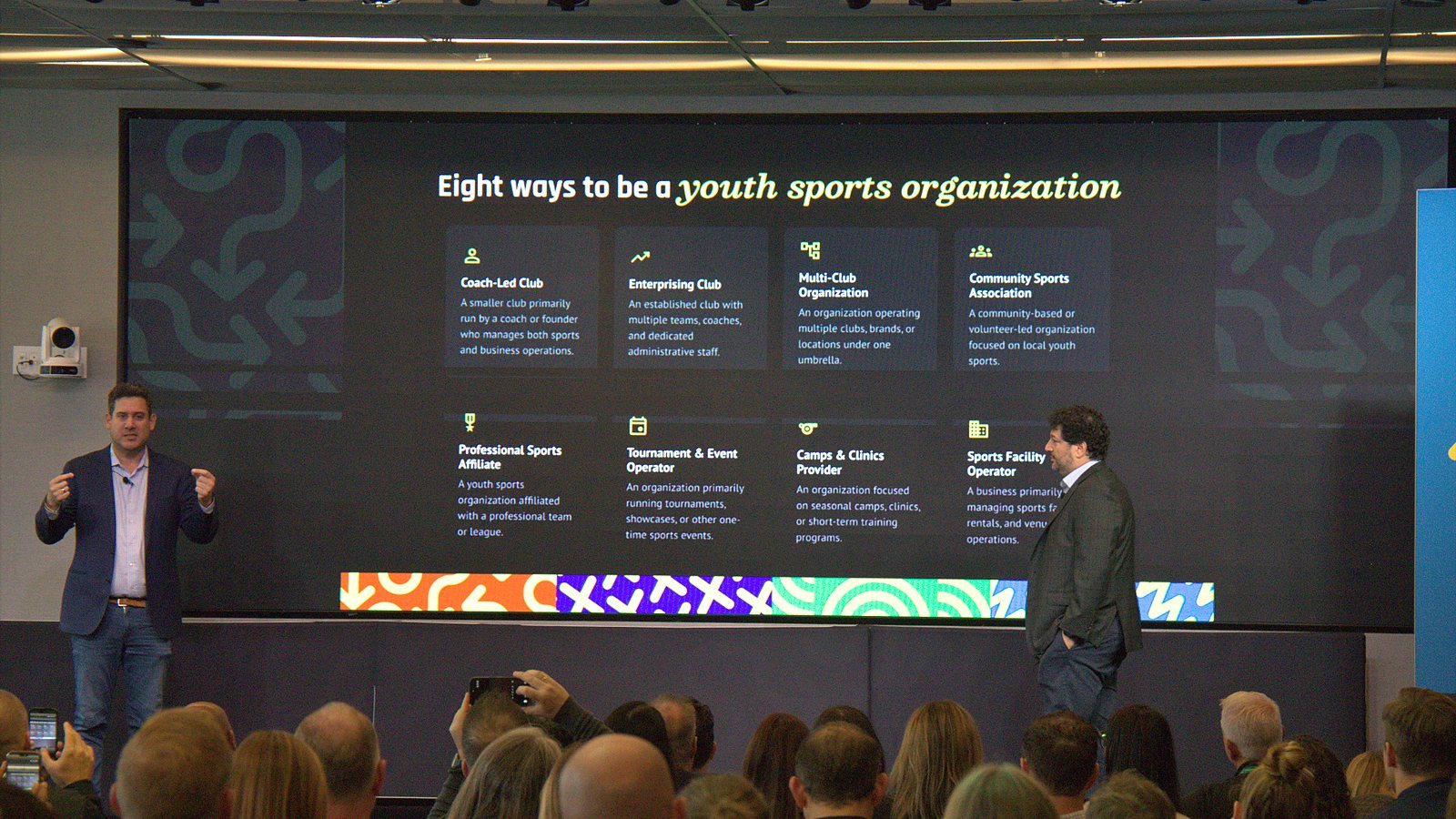
On stage: Brian Litvack, co-founder and CEO, LeagueApps · Jeremy Goldberg, president, LeagueApps · Host: Suzy Kolber
The headlines, and what's missing from them
Goldberg opened with the last 60 days of coverage: front-page stories in the Wall Street Journal and the Washington Post, the New York Times, a New York Magazine cover. Three themes run through them, he said. Affordability, at a time when everything else a family pays for costs more; "Congress actually has a term for this right now. Youth sports is a grocery store issue." Capital, from mergers and private equity to real estate financing, with a narrative that sometimes conflates investment with rising costs. And safety, where "even one story is one story too many."
Those are real problems, he said, but reading them is like trying to understand a game from a 10-second highlight clip. What's missing is the reality of the people in the room. He asked operators to raise a hand if they're paying more for facilities, heating, insurance, coaching and labor. Most did. "Most operators are making less money in youth sports, not more."
Underinvested, not overinvested
Youth sports in the U.S. runs through the Olympic movement and its national governing bodies, through schools and colleges, and through independent organizations that may belong to none of them, Goldberg said. The result is inconsistent standards, confusing pathways for parents, safety gaps that let bad actors move from one system to another, and good actors paying for the same checks several times over. Kids in underserved communities fall through the cracks first.
The paradox, he said, is that the country is underinvesting. Peer nations spend on average about two and a half times the public dollars the U.S. does on youth sports programs, facilities and infrastructure. "When people talk about pay to play, they're missing the fact that it's always pay to play. It's just a question of who's paying." Elsewhere it's largely government. Here it's families, plus a philanthropic sector that has found youth sports too fragmented to give to.
Eight kinds of organizations
Litvack said he has asked every operator he's met the same three questions for 20 years: how did you get involved, what makes your organization unique, and where do you want to go. At a hackathon the day before the conference, LeagueApps put more than 50 data points from its platform and outside research into its models and asked how youth sports really breaks down. The answer was eight types of organizations, each with its own mission and its own problems:
- Coach-led clubs, run by a coach or founder who handles both the sports and the business, started with a mission and rarely a profit motive, until demand outgrows what one person can do.
- Enterprising clubs, established clubs with multiple teams, coaches and dedicated administrative staff, which accept that they need a margin to be sustainable. Litvack put them at roughly half a million to a few million dollars in revenue before their processes have to be rebuilt; more of them are for-profits.
- Multi-club organizations, the platforms: multiple clubs, brands or locations under one umbrella, sharing best practices across communities.
- Community sports associations, community-based and volunteer-led, often nonprofit, trying to get as many kids playing as possible.
- Professional sports affiliates, the youth programs of pro teams, leagues and brands.
- Tournament and event operators, who run showcases and one-time events and sell to the clubs.
- Camps and clinics providers, focused on seasonal camps and short-term training programs.
- Sports facility operators, which increasingly program their own space instead of renting it out.
He had each group stand up in turn, along with the sports-based youth development organizations serving underserved communities. Parents, he said, often can't tell a town league from a coach-led club, which is part of the problem.
Most sports problems are business problems
Goldberg borrowed from Jim Collins' "Built to Last": enduring organizations keep their core values and purpose fixed while their strategies and practices endlessly adapt. In youth sports the why is fixed and the how has to be dynamic. Most organizations have no CFO, no CMO and no finance team, "and so most things that they think about as a sports challenge is actually a business challenge." You need better coaching because you can't afford better coaching. You need a facility, so you need to finance it. You want accessibility, so you need a business model that funds scholarships.
What LeagueApps is building
Litvack ran through the product updates: tryouts and player development workflows, lessons as a program type, marketing services beyond website development, and business solutions that include insurance and access to capital. Background checks and safety workflows are being built deeper into the platform (see Benita Fitzgerald Mosley's session). On AI, he described the hackathon: one operator wanted to know how much time each kid actually spends on the field, and the team built a tool off schedule data to answer it. The bigger idea is benchmarking, using 15 years of data on thousands of organizations to compare an operator with its real peers.
"Youth sports matters"
Litvack closed where Goldberg started, with the headlines. "People don't talk about things that don't matter. Youth sports matters right now." The next chapter won't be written by the media or by investors, he said, but by the people doing the work. The most fragmented system in the world can be the most dynamic one, because so many organizations with different goals share one conviction. Then he had 420 people row together, Norway-style.
The Coach's Board take
Find your organization on the list of eight, because the advice for a coach-led club (write things down before you hire) is different from the advice for an enterprising club (build the margin before you build the facility). And take the business-problem framing literally: if your biggest sports problem this season is coaching, the first fix is usually the budget line, not the clinic.
Free. Join the founders, operators and coaches building youth sports.