
ReportNextUp '26
"We Have Capital, but We're Not Capital": Rocket Youth, RISE and an Investor on Who They Back
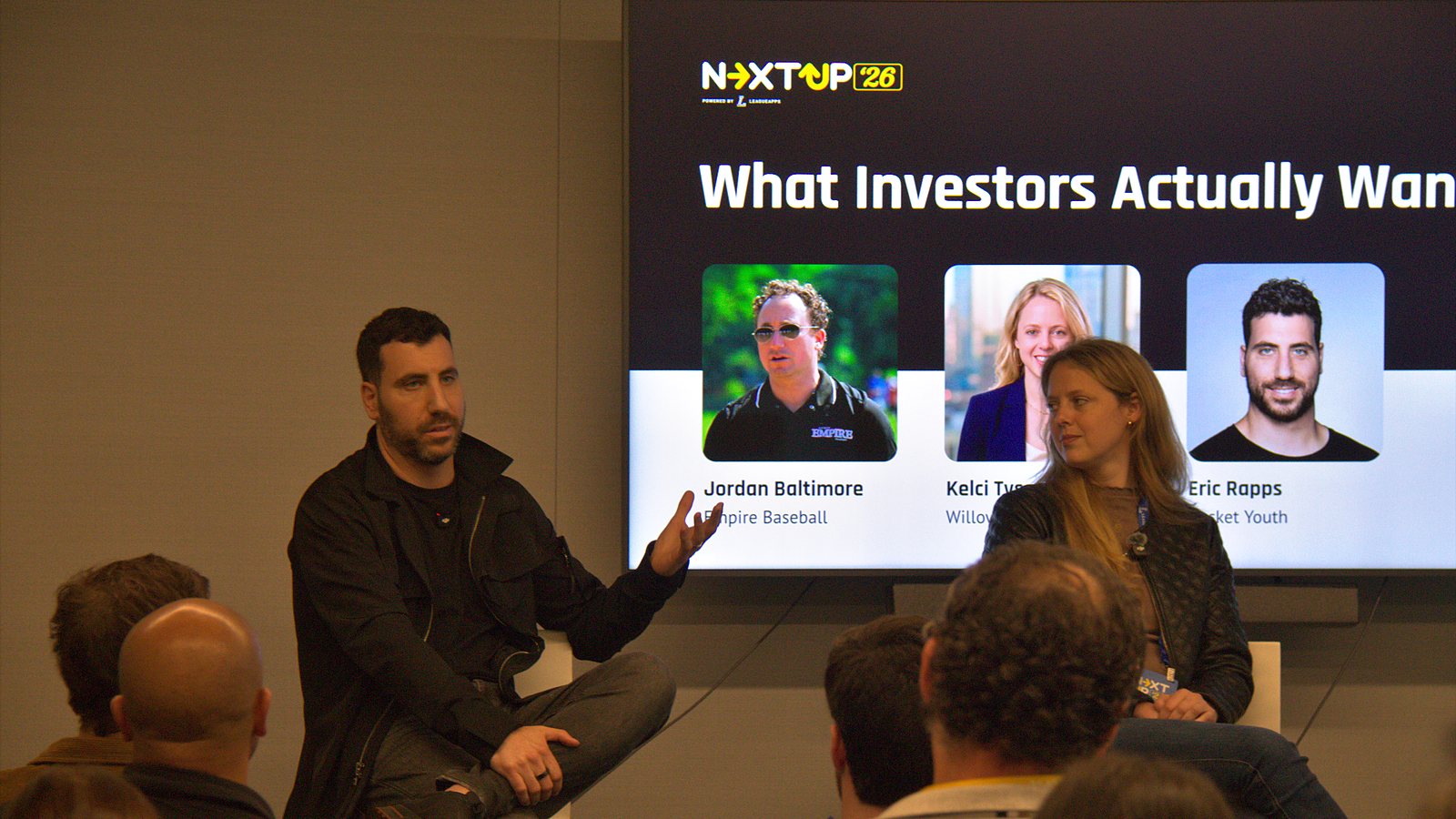
Rocket Youth's Eric Rapps, New York Empire Baseball's Jordan Baltimore and Willow Reserve Capital's Kelci Tyson told operators what a platform deal looks like from both sides, and why financial literacy, not profit, is the price of entry.
Reported at LeagueApps' NextUp '26 Youth Sports Conference · Oct. 14, 2026 · Civic Hall, Union Square

On stage: Eric Rapps, co-founder and CEO, Rocket Youth · Jordan Baltimore, founder and CEO, New York Empire Baseball, which Shore Capital acquired in 2025 to launch RISE Partners · Kelci Tyson, CEO, Willow Reserve Capital · Moderator: Brian Litvack, co-founder and CEO, LeagueApps. We recorded this session from the back of the room, so we've kept to what came through clearly.
Operators, not a fund
Litvack opened by asking Rapps what kind of capital Rocket Youth is. "I wouldn't call us capital. We have capital, but we're not capital." Classic finance means an investor who isn't an operator; Rocket runs businesses, with cash flows to balance. The company buys into youth organizations and keeps the founders running them, which Rapps joked is like having "80 different wives all over the country" he talks to every day.
The structures are flexible, he said, but there's a sweet spot, and it isn't a founder who wants out. "If somebody wants to sell out, we're not the right person." Rocket wants the business as it is: "We don't want to change you. We want to add fuel to the fire you've already built," plus best practices from the leading operators in each sport and from other industries. What matters most is who is running the business the day after, and that person doesn't have to be the founder; someone can be promoted into the role, as long as they know the customer, the market and the competitors.
What it looked like from the other side
Baltimore built New York Empire Baseball from raking fields as a volunteer to more than 1,100 players and 85 teams. He wasn't looking for capital, he said; the question was how to grow a lot without constantly adding hours of work. In most businesses more customers spreads the problems out. "In youth sports, everyone has unique youth." What Shore brought wasn't only money but the experience to grow faster with less risk.
His advice to operators is literacy. Know the difference between cash flow and taking in money for programs you haven't delivered yet; otherwise "you're just counting the amount of money that's in your pocket." Understanding what you make, how you make it and why, and what's out there that you aren't making, matters more than every line of the P&L. And go in upfront, with nothing to hide. Asked whether building the company around safety and sustainability instead of top-line growth cost him at valuation, he said the opposite: "It changed our multiple in the right direction."
The facility as a social membership
Tyson, an investor and a mother of four who has "spent more time sitting in a parking lot than a human should," is looking at facilities as places families want to be. Her model borrows from the YMCA. A parent drops a three-year-old into a soccer skills class, works out, picks the kid up and gets a burger while the older kids are at club practice in the same building. Add adult leagues in the evening and education programming during the day, and a building that was used from 5 to 10 p.m. runs from 8 a.m. to 11 p.m. She's working with school districts in Dallas, where the soccer market is maxed out, to add field access at lower cost.
The risks they name
Asked what keeps them up at night, nobody said competition. Safety came first: a second bat in a batting cage, Rapps said, is the kind of problem nobody can un-solve, while time and money can be solved with the right partners. He also said Rocket doesn't want to grow through price increases, and that the bad actors in the headlines are few but loud. On the political noise around private equity in youth sports, the comparison on stage was to physicians joining larger medical practices, and the open question was how long the attention lasts.
The Coach's Board take
Three people with money on the table agreed on the entry ticket, and it isn't profit. It's a founder who can explain the business in numbers and wants to keep running it. If you're years away from a conversation like this, Baltimore's cash-flow point still applies: registration money for the spring season isn't yours until you've delivered the spring season.
Free. Join the founders, operators and coaches building youth sports.