
SBJ Game Changers 2026 · 4:30 p.m. · The New Wager Landscape
Prediction Markets Pitch Engagement. A Banker Warned of a Reckoning.
Kalshi, the NHL and a gaming lawyer made the case that prediction markets grow fandom, hours after J.P. Morgan's Kristin Lemkau warned about young men and risk on the same stage.
Reported at Sports Business Journal's 2026 Game Changers Conference · Oct. 1, 2026 · New York Marriott Marquis
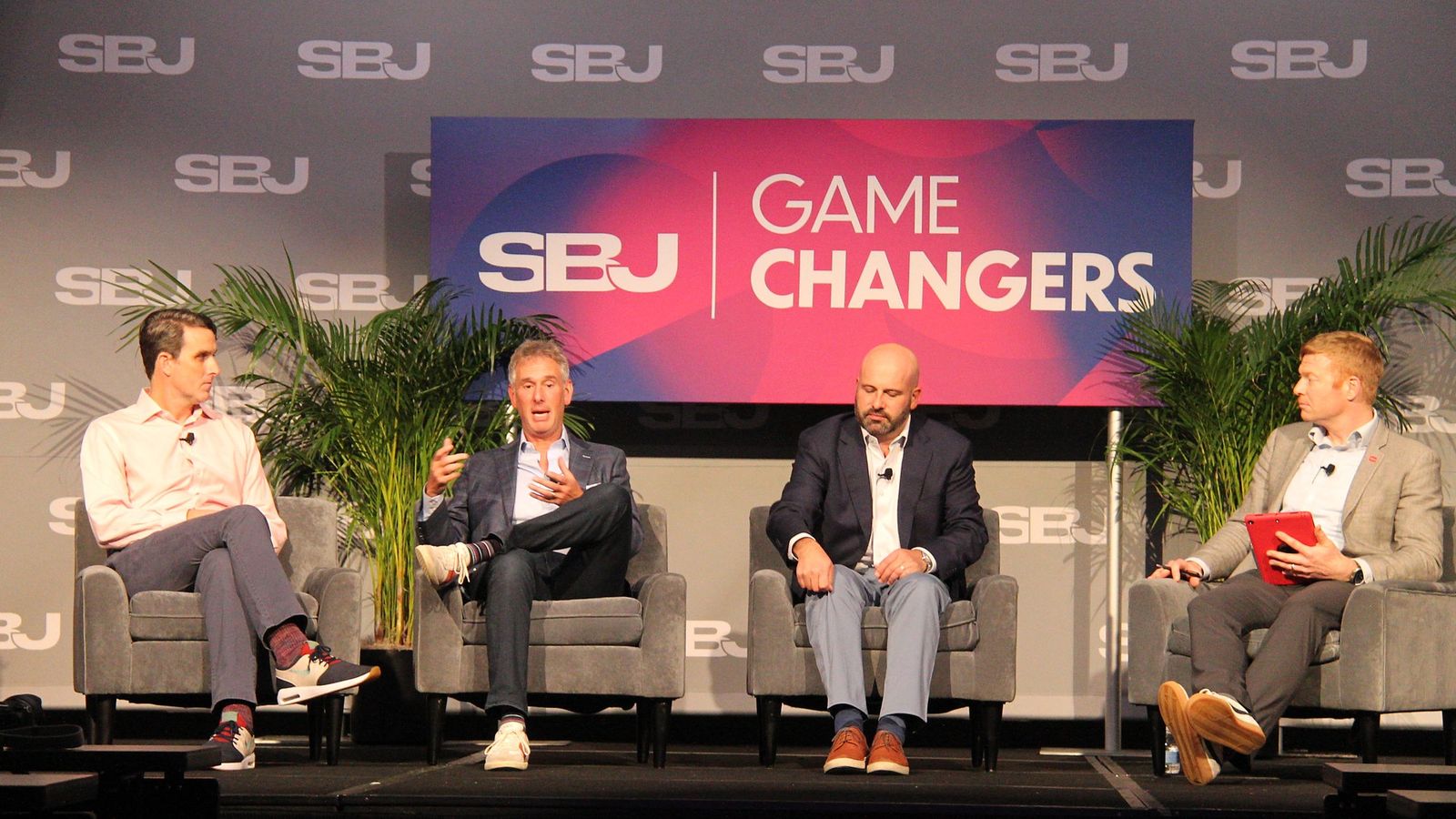
On stage: Adam Barrick, head of sports partnerships, Kalshi · Keith Wachtel, president, NHL Business · Evan Davis, head of the gaming and sports practice, Royer Cooper Cohen Braunfeld · Moderator: Joe Lemire, Sports Business Journal
Traders, bettors and fans
Lemire opened with a question for rights holders: do they care whether fans wager with a sportsbook or a prediction market?
Barrick said Kalshi's data shows traders have different motivations than sportsbook bettors, and that sportsbook handle in some large states has kept rising. He rejected the narrative that prediction markets will kill online sportsbooks, calling the two complementary.
Wachtel's view is that any reason to care helps. Fantasy, sports betting and prediction markets all send people looking for scores and highlights. "We want them to watch a little bit of our game," he said. Most people don't watch all 84 games, so leagues have to talk to fans differently. He added that sportsbooks, and soon prediction markets, increasingly see themselves as media companies.
Kalshi's numbers
Barrick said sports are new for Kalshi, and "the watershed moment for us with sports was the 2025 Super Bowl." Early data shows its sports traders watch games more consistently, he said, and are more likely to attend games, subscribe, watch shoulder programming and buy merchandise.
The bigger differentiator is what he called cross-pollination. Between mid-June and mid-July, during the World Cup, Kalshi added 3 million new users, he said, and a third of them also traded on non-sports markets. People who arrive through news, politics or pop culture markets end up trading sports, too.
Late in the session he added another figure. Almost 75% of the people who come to Kalshi never place a trade, Barrick said. "They just want to see the data and the probabilities." That's why Kalshi favors a crawl-walk-run approach to putting its odds into broadcasts and media.
Why leagues sign
Wachtel said the NHL was early to prediction-market partnerships, and noted the products are federally regulated by the CFTC. There's money involved, he said, but that isn't the main reason. "We're doing it because of the engagement. We're doing it because it's part of what people are doing."
Davis called these deals "perhaps the most activatable sponsorships that there are," because they tie directly to what happens in the game. Teams and leagues buy in with guardrails, he said, and the stigma is wearing off; horse racing and boxing grew up alongside wagering. On integrity, he argued that most problems come from offshore and underground operators, so the more activity moves to regulated platforms, the better.
Federal oversight isn't the end of the story. Kalshi is fighting several states, including a lawsuit New York's attorney general filed in July alleging it runs an illegal gambling operation.
The other view from the same stage
Hours earlier, J.P. Morgan Wealth Management CEO Kristin Lemkau named prediction markets as the trend the industry isn't talking about enough. "I think we're headed for a reckoning with young men," she said, pointing to crypto and prediction-market trading as a dopamine hit, some of it promoted by elite athletes.
The Coach's Board take
Leagues see engagement; a wealth manager sees risk. For youth sports, the person in the middle is the high school senior who turns 18 with a phone full of apps and, in some states, an NIL deal. Coaches and parents should be ready for that conversation before the birthday.
More from SBJ Game Changers 2026
- 8:45 a.m. · The Val Ackerman Legacy of Leadership AwardVal Ackerman's Rules for the Long Game
- 9:10 a.m. · Top of the AgendaHockey Romance, Stadium Takeovers and the Squeezed Middle
- 9:50 a.m. · Bridging the GapTwo Partnerships Built Around What Players Actually Needed
- 10:25 a.m. · SBJ Connect · Photo essayPick a Neighborhood, Find a Table: Inside SBJ Connect
- 11:20 a.m. · From Activation to ImpactFord Gave LPGA Rookies Broncos. The Bigger Gift Was Mentors.
- 11:40 a.m. · One-on-One with Kristin LemkauKristin Lemkau on Messy Careers, Mediocre Teams and Athletes' Money
- 12:10 p.m. · Leading a Modern Sports FranchiseShelly Cayette-Weston's Hornets Playbook: Fill the Building First
- 1:50 p.m. · Leadership Lessons from a TrailblazerKim Ng on Getting Rejected in Public, and Saying Yes to Softball
- 3:00 p.m. · The New Playbook for College AthleticsVanderbilt's AD: If We're Not Careful, Women's and Olympic Sports Lose
- 4:00 p.m. · The Human EdgeThe AI Panel's Rule: Start With the Problem, Not the Tool
Join youth sports leaders reading every issue.