
SBJ Game Changers 2026 · 11:40 a.m. · One-on-One with Kristin Lemkau
Kristin Lemkau on Messy Careers, Mediocre Teams and Athletes' Money
J.P. Morgan Wealth Management's CEO talked about the athlete council she pushed for, why NIL makes financial literacy urgent, and the "reckoning" she sees coming for young men.
Reported at Sports Business Journal's 2026 Game Changers Conference · Oct. 1, 2026 · New York Marriott Marquis
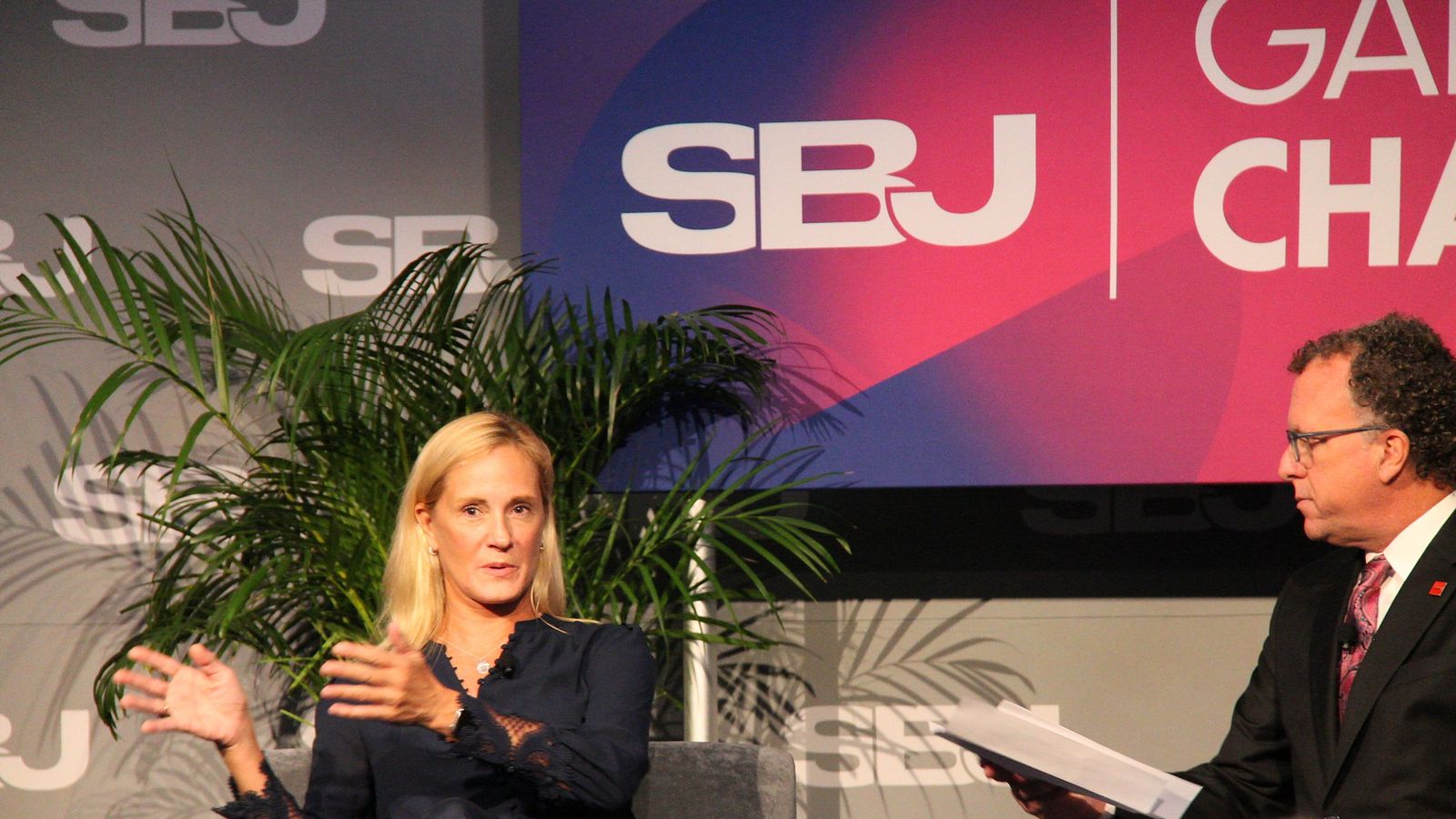
On stage: Kristin Lemkau, CEO, J.P. Morgan Wealth Management · Moderator: Abe Madkour, Sports Business Journal
Lemkau joined J.P. Morgan almost 30 years ago, before Jamie Dimon arrived and when the bank was a fraction of today's JPMorgan Chase. She spent years in communications and marketing before taking over wealth management, a move some people found odd. Her explanation: "Marketing is all about growing things."
Careers are messy
The worst advice she absorbed early came from two tropes, she said. First, women who felt they had to answer email at midnight and skip their kids' soccer games. Later, women who acted like they had it all.
"Every step of your career is messy," she said, and "you don't have to pretend everything's awesome."
On teams, she said high-performing people don't like mediocre people, so a few weak performers can sink a strong group. Everyone waits too long to make a change, herself included. "It is the lowest standards you tolerate that is the measure of your team."
What she looks for that isn't on a résumé is whether someone is fundamentally happy. You can coach people to do a job better, she said, but you can't coach them out of blaming others.
Asked for her own defining trait, she picked vulnerability. Young women look at senior women and assume they have different DNA, she said, but everyone is dealing with the same mess. "I've fed my kids Pop-Tarts for dinner," she said. Hearing that makes success feel achievable.
Athletes as people, not products
JPMorganChase's Athlete Council launched in March. Lemkau described it as 10 elite athletes, five women and five men, and named A'ja Wilson, Sue Bird, Megan Rapinoe, Alex Morgan, Ally Love, Dwyane Wade, Tom Brady, Jalen Brunson, Kayvon Thibodeaux and Jayden Daniels.
Its job is financial education for athletes, especially young, college and female athletes who will hit their peak earnings during their NIL years. "Most people in wealth management are trying to pick off the millionaires," she said. This audience is underserved. The program is built "by athletes for athletes," because a kid will listen to Jalen Brunson far more than to a banker.
At the first meeting, she kicked the handlers out of the room. Dimon came in, and Brady sat there taking notes. "Everybody we asked said yes," she said, and now other athletes are calling to join.
The core message is to start investing early and understand the trade-off between spending now and compounding. "Making money doesn't make you rich. It's what you do with it," she said. Athletes manage what they eat and how they sleep with precision, but money is an afterthought, even though "you're lucky if your career lasts until you're 28."
She cited the statistic that one in six NFL players files for bankruptcy after retiring. That tracks a 2015 National Bureau of Economic Research study that found 15.7% had filed within 12 years of leaving the game.
The program covers high school and college athletes, pros and retirees. Athletic directors now ask J.P. Morgan to visit campus, and "some of the winningest coaches are the ones who have been the most interested," she said. On campus, the face is Mikael Lemieux, who runs J.P. Morgan's Athlete Center of Excellence; Lemkau described him as a former pro hockey player and certified financial planner.
Her summary of the whole effort: "athlete as human, not athlete as product."
The reckoning she sees coming
Asked what the industry isn't talking about enough, Lemkau went straight to prediction markets, which she said are bringing betting into investment accounts. J.P. Morgan doesn't offer them. She has a 17-year-old son, and she said she sees it with her own kids, not just in the news.
"I think we're headed for a reckoning with young men," she said. She worries about get-rich-quick behavior: too much crypto, too much prediction-market trading for the dopamine hit, some of it promoted by elite athletes. Markets will turn, she said, and she has had to remind younger colleagues who don't remember 2008.
She's an enthusiastic AI user. Her daughter in college thinks Lemkau is her personal assistant and "has no idea that it's Claude" building her internship spreadsheets. But she was blunt about handing AI agents the keys. Bots are already trying to move money, she said. Her advice: never give an AI agent your bank credentials or your credit card.
Her advice to young women was simpler. "Play the long game," she said. "Enjoy it. Have more fun."
The Coach's Board take
The financial-literacy gap Lemkau describes doesn't start in college. Youth sports parents and high school coaches are the first line, especially as NIL money reaches high schoolers in many states. "Start investing early" is a lesson worth teaching about the same time as "show up to practice early."
More from SBJ Game Changers 2026
- 8:45 a.m. · The Val Ackerman Legacy of Leadership AwardVal Ackerman's Rules for the Long Game
- 9:10 a.m. · Top of the AgendaHockey Romance, Stadium Takeovers and the Squeezed Middle
- 9:50 a.m. · Bridging the GapTwo Partnerships Built Around What Players Actually Needed
- 10:25 a.m. · SBJ Connect · Photo essayPick a Neighborhood, Find a Table: Inside SBJ Connect
- 11:20 a.m. · From Activation to ImpactFord Gave LPGA Rookies Broncos. The Bigger Gift Was Mentors.
- 12:10 p.m. · Leading a Modern Sports FranchiseShelly Cayette-Weston's Hornets Playbook: Fill the Building First
- 1:50 p.m. · Leadership Lessons from a TrailblazerKim Ng on Getting Rejected in Public, and Saying Yes to Softball
- 3:00 p.m. · The New Playbook for College AthleticsVanderbilt's AD: If We're Not Careful, Women's and Olympic Sports Lose
- 4:00 p.m. · The Human EdgeThe AI Panel's Rule: Start With the Problem, Not the Tool
- 4:30 p.m. · The New Wager LandscapePrediction Markets Pitch Engagement. A Banker Warned of a Reckoning.
Join youth sports leaders reading every issue.