
SBJ Game Changers 2026 · 12:10 p.m. · Leading a Modern Sports Franchise
Shelly Cayette-Weston's Hornets Playbook: Fill the Building First
The Charlotte Hornets' business chief on rallying a whole staff around one attendance number, a $2 food menu, and why the decisions about your career happen in rooms you're not in.
Reported at Sports Business Journal's 2026 Game Changers Conference · Oct. 1, 2026 · New York Marriott Marquis
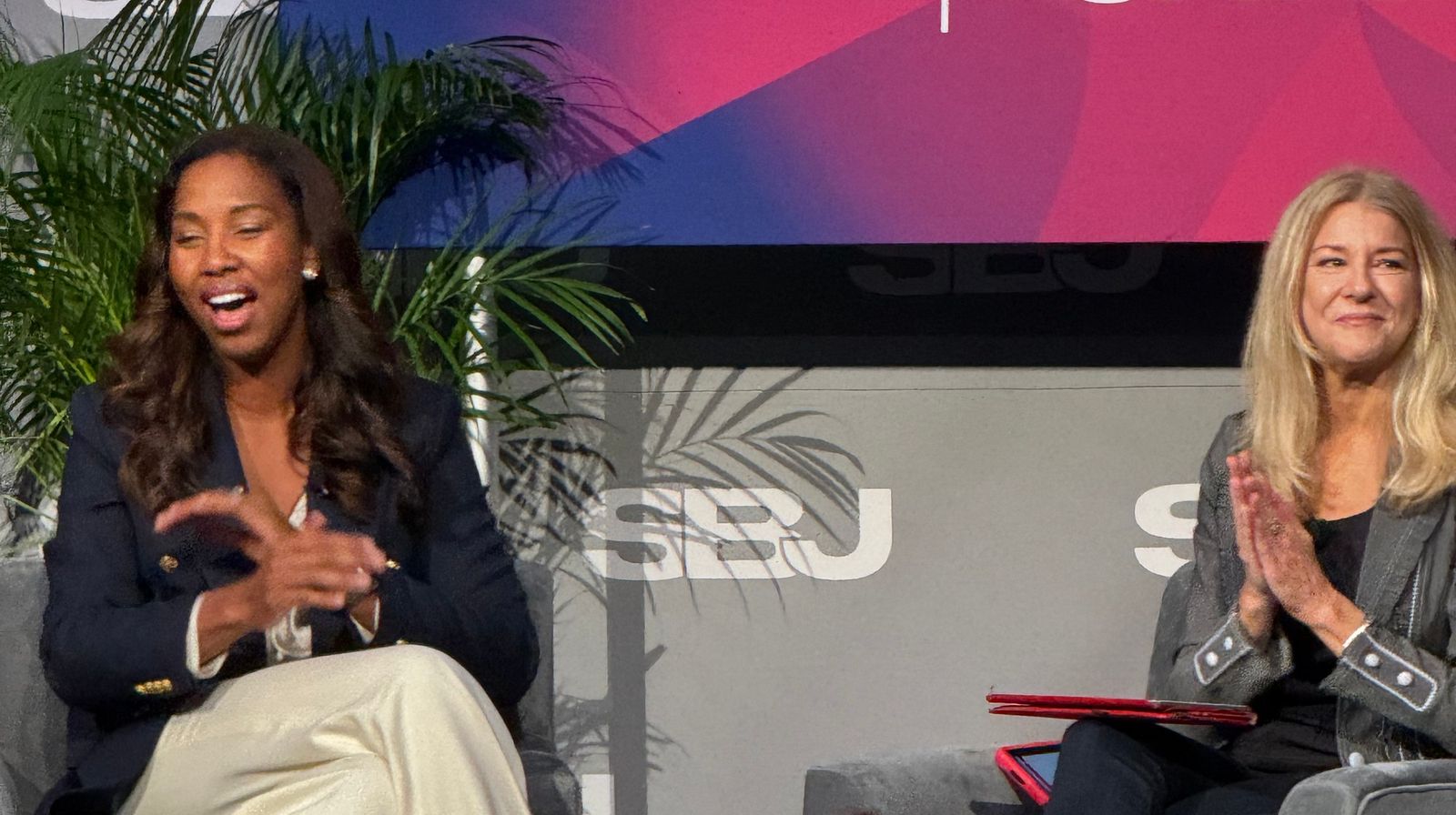
On stage: Shelly Cayette-Weston, president of business operations, Charlotte Hornets · Moderator: Bonnie Bernstein, founder and CEO, Walk Swiftly Productions
Bernstein ran through the résumé: a Tulane basketball player who played professionally overseas, then five years with New Orleans' NBA team and a long run with the Cleveland Cavaliers, where in 2022 she became the first Black woman to serve as an NBA team's EVP and chief commercial officer. She has run the Hornets' business side for more than two years.
A job she wasn't looking for
Cayette-Weston said she wasn't job hunting when Rick Schnall and Gabe Plotkin, who bought the Hornets in 2023, started talking with her. She had a 3-year-old, family in Cleveland and a husband who scouts for the Yankees and is rarely home. What won her over was how passionate the new owners were about what they could build.
She prepared hard. Her husband booked her a hotel room in downtown Cleveland for a weekend so she could write a business plan away from the kids, and that's the plan she brought to the owners. But she doesn't think it's what sold them. They did rigorous diligence, she said, calling people and pulling the results of teams she'd worked for.
The lesson she took: "Decisions for jobs, goals, promotions are happening by other people," in conversations you aren't part of. Make sure your relationships and your record speak for you there.
Fill the building first
She'd seen franchises at the bottom before. She started her career in New Orleans after Hurricane Katrina, when the team staged 100 events in 100 days to reconnect with a battered city. She got to Cleveland after LeBron James's first departure and stayed long enough to see a championship parade.
In Charlotte, the NBA's own rankings showed the problem, she said: the Hornets were 28th of 30 in attendance. The plan didn't start with ticket sales. It started with agreeing that without people in the arena, nothing else, from tickets to merchandise to sponsorships, can be sold.
The hard part, she said, was alignment. The goal was aggressive, roughly 2,000 more fans per game, and every coordinator, intern and executive knew the number. A cross-department team worked on it, with HR as involved as digital. The Hornets did 40 community events, not 100, she said, but the idea was the same.
Last season, she said, the Hornets led the NBA in attendance growth, ahead of the Spurs and Pistons, and posted top-three revenue growth. It wasn't just about what happened on the court.
The $2 menu
Bernstein raised what it costs a family of four to go to a game: tickets, gas, parking, food, and the T-shirt the kids will inevitably want. Cayette-Weston's answer started with culture and fan feedback. Every friction point is a reason to stay home, she said.
Ownership wanted an affordable, accessible food option. She and the team's CFO proposed a $4 menu, and ownership said $4 wasn't cheap enough. The Hornets landed on a $2 menu of five items, including hot dogs, pretzels, water and chips. "We sold 4,000 hot dogs in the first day," she said. The team upgraded its premium food at the same time, because you have to have something for everyone.
The arena was renovated top to bottom, closing for two summers, and a new practice facility is going up across the street. Cayette-Weston said the team generates $350 million a year in economic impact for the region and supports 1,200 jobs directly. Next, the Hornets are working with the city, the county and developers on restaurants and mixed-use projects so downtown has energy on non-game nights.
Owning the role before the title
Early in her career, she said, she asked for the projects nobody else wanted and tried to over-deliver. She never planned to run an NBA team's business; 20 years ago, there were no women doing it. But she pushed for change before she had the title. In Cleveland she helped change the ticket-sales department's dress code after hearing from young women who worked there, and helped revise the team's parental leave policy.
Today, she said, she actually makes fewer decisions than she used to and asks her team more questions. The lesson from sports she leans on most is adaptability. And for the women in the room, a charge: "We've got a responsibility to be bigger and bolder."
The Coach's Board take
The $2 menu answers a question every youth sports organization faces: what does it cost a family to show up? Cayette-Weston's playbook works for a rink or a rec league as well as an arena. Know your number, get everyone aligned on it, and remove the friction that keeps families home.
More from SBJ Game Changers 2026
- 8:45 a.m. · The Val Ackerman Legacy of Leadership AwardVal Ackerman's Rules for the Long Game
- 9:10 a.m. · Top of the AgendaHockey Romance, Stadium Takeovers and the Squeezed Middle
- 9:50 a.m. · Bridging the GapTwo Partnerships Built Around What Players Actually Needed
- 10:25 a.m. · SBJ Connect · Photo essayPick a Neighborhood, Find a Table: Inside SBJ Connect
- 11:20 a.m. · From Activation to ImpactFord Gave LPGA Rookies Broncos. The Bigger Gift Was Mentors.
- 11:40 a.m. · One-on-One with Kristin LemkauKristin Lemkau on Messy Careers, Mediocre Teams and Athletes' Money
- 1:50 p.m. · Leadership Lessons from a TrailblazerKim Ng on Getting Rejected in Public, and Saying Yes to Softball
- 3:00 p.m. · The New Playbook for College AthleticsVanderbilt's AD: If We're Not Careful, Women's and Olympic Sports Lose
- 4:00 p.m. · The Human EdgeThe AI Panel's Rule: Start With the Problem, Not the Tool
- 4:30 p.m. · The New Wager LandscapePrediction Markets Pitch Engagement. A Banker Warned of a Reckoning.
Join youth sports leaders reading every issue.