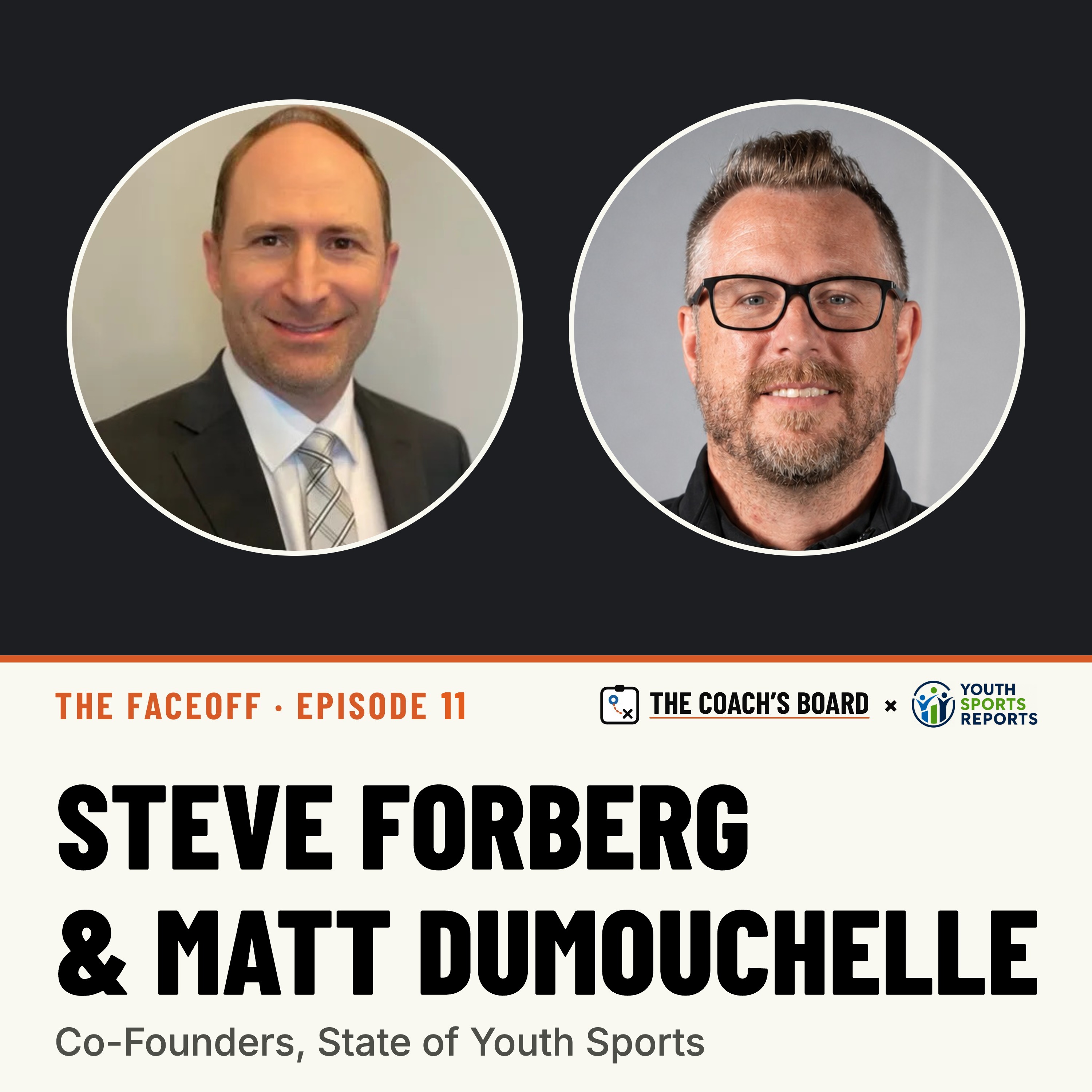
THE FACEOFF · EPISODE 11
Episode 11: Steve Forberg, Matt Dumouchelle & State of Youth Sports — Two Ears, One Mouth
Steve Forberg, Matt Dumouchelle · Co-Founders, State of Youth Sports
The guests
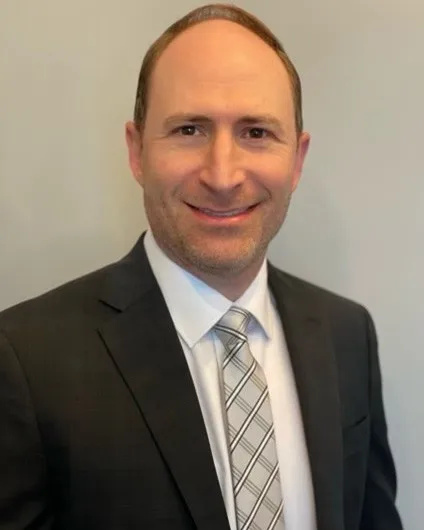

Steve Forberg, Matt Dumouchelle
Co-Founders, State of Youth Sports

Steve Forberg has spent more than 25 years in the game as a player, coach, trainer and advisor, 18 of them behind AAA and AA benches. Matt Dumouchelle was assistant general manager of the OJHL's Leamington Flyers, sits on the board of Riverside Minor Hockey and writes the Hockey Factories series on the best development programs in the world. Both are hockey dads. They met on LinkedIn, and together they founded State of Youth Sports, the team behind the Youth Sports Report: a verified, three-minute survey that lets families tell their club how the season is really going.
This is Episode 11 of THE FACEOFF: forty-seven minutes with Steve and Matt. Paul came in with one question: a club is a business with customers, so why do most clubs still find out what those customers think by word of mouth?
WHAT'S IN IT
• What happens on the team stays on the team. A club with 20 teams has 20 seasons going on at once, and most of what happens on each one never travels past the families on the roster. What does reach the people running the club comes from the lobby, and "it's not always the loudest person in the room that shares the opinion of all of the parents." Steve's rule: "God gave us two ears to do more listening and one mouth to do less talking."
• The angry email doesn't fix it, because there's a waiting list. A restaurant owner answers an angry customer within 24 hours. A club often doesn't have to: "when revenue is consistent and there's a stream of people waiting to get in, there's not a necessary need to fix every small problem that exists." Matt on what the money has done to expectations, from $300 for house league to $20,000.
• Eighteen statements, three minutes, and the coach never sees who said what. How the Youth Sports Report works: the club sends the link, each family rates 18 statements on a one-to-five scale across seven categories, and the club gets a report with no names in it. Paul's test case, a 15-player roster with two unhappy families: "the coach will never know who those two families were."
• Ask in November, not in March. Tryouts are in April and the summer is all optimism. By mid-November families have had eight to ten weeks of reality. Why Steve and Matt want clubs asking more than once a season, and what it tells a club when families don't answer: "there's information in that too."
• It's not a witch hunt. It's how you find your best coaches. The question Matt asks every program in his Hockey Factories series, why 13 good responses out of 15 is something to celebrate, and the stakes behind all of it: "we need to build sports for the kids, not for the pro athlete."
• Rapid fire. The Leafs and the Red Wings, the best rinks they've ever walked into, their advice for founders, and the one thing Steve wants every club to stop doing tomorrow.
FIND STEVE, MATT AND STATE OF YOUTH SPORTS
https://www.youthsportsreports.com
The 18 statements: https://www.youthsportsreports.com/survey
Instagram: https://www.instagram.com/youthsportsreports/
Coaching Crossover Podcast: https://podcasts.apple.com/us/podcast/coaching-crossover/id1867268315
The written version of this conversation is THE FACEOFF VOL XVII, free at https://thecoachsboard.com. If you run a club, a facility, a league or a team, or you're building something for the people who do, we'd like to hear from you.
The Coach's Board is the community building youth sports. Home of The Faceoff Podcast.
Instagram · X · TikTok: @thecoachsboard
Transcript
Paul Variano Welcome in. This is The Coach's Board, the community building youth sports. I'm Paul Variano, and every episode we sit down with someone who actually runs this game. My guests today have spent their lives in hockey rinks, and now they're asking the people in the stands the same question most clubs never ask. Steve Forberg has spent more than 25 years in the game as a player, coach, trainer and advisor, including 18 years behind AAA and AA benches. He co-owns H2T Elite Dryland Training in Toronto, advises players and families with Avenue Sports Management, and he's a hockey dad with a son playing NCAA hockey. Matt Dumouchelle was assistant general manager of the Leamington Flyers of the OJHL and sits on the board of Riverside Minor Hockey. He writes the Hockey Factories series for The Coaches Site and hosts the Coaching Crossover Podcast. Together, they founded State of Youth Sports, the team behind the Youth Sports Report, a verified survey that lets families tell their club how the season is really going, so the club can see what's working and fix what isn't. Their line for it: when we better understand the youth sports experience, we can build a better one. Steve Forberg and Matt Dumouchelle, welcome to The Coach's Board.
Steve Thanks for having us.
Matt Dumouchelle Yeah, this is great. Thanks a lot.
Paul Variano Thanks for coming on. Really excited to have you, and here's why I want you both on. Before I started coaching, I spent a decade in human resources and financial services, and a lot of the time went to employee engagement surveys. So I know how much an organization learns when it asks its own people how things are really going. A club is a business too. A club director has a P&L and customers, and in 2026, most of them still find out what those customers think by word of mouth. You two built a way to ask. So today, I want to hear how each of you got here, the problem you saw from inside the game, a real walkthrough of how the report works, and where you want to take it. So let's start at the beginning. Steve, this was your idea, so you get the first word. What did your life in the game look like? And when did you first think, somebody has to build this?
Steve I've been involved in the game for a very long time, from a coaching perspective, from a parent perspective, from an advisor perspective. as we all know in the youth sports arena, be it hockey, baseball, football, soccer, there's the good, there's the bad, and there's the ugly involved in the game. And we're trying to just bring to light how we can make the game better for the people that are in the game, using the experience and understanding what organizations are providing, what parents and players are really looking for at the end of the day. it was an idea of collaboration with myself and Matt, But the bottom line here is there's a need for it, there's a need for the questions to be answered, and there's a need for understanding what programs offer great development, great coaching, great communication.
Matt Dumouchelle for me, sports has always played an important part in my life. I've been fortunate enough to work in a few different sports areas in my time. I worked with a professional basketball team in Windsor and won two championships with them. Worked for a pro baseball team out of London, Ontario, and then got into the hockey environment where I was assistant GM with a few different clubs, including Leamington there a couple of years ago. And also I've got a nine-year-old son, who I joke hates his father because he wants to be a goalie. But I get to see it from a number of different angles now and see where these players are coming from, but more importantly, where the families are coming from. This is certainly a place and an environment, as Steve kind of mentioned, where you don't really hear about what's going on unless you're listening through a wall or seeing a parent or player and the way that they behave at a game or the chitter-chatter in the lobby afterwards. So for us, from an organizational perspective, it was really important to narrow down how organizations can improve the best youth sports experience for all kids that are included, We're not just talking about AAA kids that are OHL-bound. We're not just talking about house league kids. It's everybody in between that has a say or should have a say in how that organization develops their players, develops their coaches, and communicates that information. I was sharing some posts on LinkedIn. Steve and I connected that way, and Steve brought this great idea that when we got off the phone, I couldn't get it out of my head. We don't have something like this, and it's incredibly important. It's not always the loudest person in the room that shares the opinion of all of the parents, or is the one that's right or wrong. So how can we help organizations improve the service that they provide? How can we give parents the best and most information possible to make decisions for their kids? And we landed on Youth Sports Reports.
Paul Variano sat in every seat: player, coach, gym owner, advisor, hockey dad. Which stakeholder showed you the problem most clearly?
Steve all those seats exposed what's going on within the game that required some attention to the detail to try to make it better for everybody that's involved. It can be better for a coach, organization, the parent, the player, I saw the frustrations from every hat that I've worn. Obviously, being a dad with my own athlete going through the system multiple times with two of my children, and then coaching for many years, seeing it with other children and athletes. The parent hat is probably the one that will have the most frustration going through the experience and the one that will bring to light the greatest areas for improvement. But it's a collaboration. It requires the organization, it requires the coaches, and it even requires the kids to say, "I need to understand why I didn't get on the power play, or why am I not playing bigger minutes?" The community as a whole is responsible for making this better. But every hat and every seat that I've sat in has exposed that there's a real need for improvement.
Matt Dumouchelle I totally agree too from the parent perspective. I've been fortunate through my career, I guess, or involvement in sports, and writing for The Coaches Site and Hockey Factories. getting to see what organizations around the world do and how they separate themselves with so many things that I think doing those features made us realize from myself personally in The Coaches Site and the information that we talk about here is that it isn't a secret sauce. A lot of it is very basic communication. It's being in alignment, it's being transparent, those types of things. And you don't see that in every arena, with every organization, with every team, wherever you may be. The one thing that Steve and I have talked about with Youth Sports Reports is the important thing that we're trying to make sure it's not just a venting session or a Yelp review of somebody who didn't like a restaurant or didn't like the coach or whatever the case may be. Because there's a lot of information out there that organizations should want to get, and it puts perspective in for the parent as well, because if parents aren't being educated with what is happening within their organization or their individual team, it's very easy to fill in those blanks with what we would assume as parents is going to be the best situation for our kids. And there is only a few kids on the ice that play in the power play. And you're not going to win every game five-nothing. And there aren't NHL scouts in the building. So does this matter one way or another? So all of those things are really important questions that parents ask, that organizations should be laying out. But this is just another avenue for them to get into granular level of: What kind of service are we providing?
Steve I'll add one thing on top of that, Paul and Matt, when we have relationships, take away sports as a whole: how we want to be treated in a relationship is exactly how families want to be treated when they're going to the rink or the baseball field or the soccer field. They want trustworthy communication. They want a good person that's gonna communicate to their child. They want somebody that they can trust to put their kid into their hands to give them the experience and the proper development. So, whatever we're looking for from our relationships outside of sports, whether it's our spouses or how we treat our children or how we interact with our bosses, why isn't that same thing held true in sports? that's what we should all be aspiring to have: dialogue that's transparent and understandable. There's no secrets going on behind the scenes. That's all we're looking for in the youth sports world.
Paul Variano It's that transparency and that visibility, talking about the Hockey Factories, Matt, You study the best development programs in the world. What do those places do with feedback that maybe a typical club doesn't do?
Matt Dumouchelle the opportunity to do the Hockey Factories series in The Coaches Site is probably the greatest blessing I've been given in the world of sports and in the access and people that I've been able to meet and you'd never cross paths with in everyday life, but learn so much from a 30-minute interview. But we've done 15 of them so far for Hockey Factories, and there's always a few things that always come back to center, right? We try to tell different stories at different angles with different clubs to try to get different feels, but they all really do come back to some of the basics, But what the organizations do, and this is something that Steve and I have talked about at length as well, this is not a witch hunt. We're not in the business to try to expose bad business or point fingers or make it just a venting session like we said. The best organizations are looking internally first. They're asking these questions to themselves. And whether or not they like the answer one way or another, they're still having those conversations. is an organization board monthly going to be evaluating how they develop players? Likely not, but is that something that should be talked about annually, biannually, within a club or an organization? Absolutely. One of the important questions that I ask when I do these Hockey Factories articles is, "What is your biggest issue or concern right now, and where are you trying to get better?" And those clubs have an answer right away. It may not be an overnight change, but they're aware of who they are and what they're trying to become and where they're not. And this is, again, more data, more information. It's not just an angry parent after a game that's venting or has something to say to the coach or to the organization or not. This is, hopefully from what we built out, a structured place where families can go and share relevant information that will help other families when they're making decisions for their kids as where to play and where not to play, but also to help organizations to say, "Hey, we've got excellent amount of comments back from parents that are using our service, and 60% of 'em say our coaches don't communicate very well." There's not much you can argue with that. It's up to you now to dive in and work through what that looks like, what it should look like, and where those gaps are. Steve and I are there to help at the back end of that as well.
Paul Variano The details are in the data, as they like to say. I'll read reviews for an hour before I buy a hockey stick. There are reviews for restaurants and hotels too, and nothing for a club a family hands thousands of dollars to. So what do families know about their season that the club never hears?
Steve A lot of stuff in the club per team. So if a club has 20 teams, each team has its own little ecosystem that's happening throughout the year. And a lot of what goes on within those small ecosystems don't penetrate upward to the organization. They stay within their little microcosm of the 15 or 20 families on that team. Now, if somebody's really upset, yeah, maybe one filters up to the higher-ups, and they have to deal with something. But most of what's going on at the team level doesn't really move up to the organization, and they don't hear a lot of the pain points, some of the things that Matt's described. That's what's critical in what Youth Sports Report will provide is giving teams the knowledge, giving the clubs the knowledge, we're not gonna make it better necessarily for 100% of the people that are participating. To expect that is gonna be very difficult. But if we can save 80% and give 80% of families knowledge, the ability to get research done and understand what's going on in their microcosm within their organization to make better decisions for their child. And ultimately, we'll hold organizations a little bit more accountable and coaches a little bit more accountable. we're also going to learn a lot about what is really good within the programs. So as much as we're not really trying to make this all about the witch hunt, there's a lot that we might learn that's really good that other organizations could take to adapt into their focus and their culture to improve. everybody can be learning and improving at the same time. my analogy is always: God gave us two ears to do more listening and one mouth to do less talking. the more we listen, the more we're gonna learn and ultimately make the experience better for the families, the athletes, and ultimately the organizations, because they'll have less problems to deal with.
Matt Dumouchelle Paul, you said it there too. there's a lot of money in youth sports now. It's expensive. It was funny. I read something not that long ago about, when you're young, you're always encouraged: save money, save money, save for your retirement, save for education, all of those things. Youth sports is now its own entity. If you're planning on having kids and your kid wants to play sports, that money is not couch-cushion money anymore. It's all over the place, and expectations get higher and higher, pressure gets higher and higher. And end of the day, we're looking back at what we're seeing for the most part and obviously extreme circumstances, but what percentage of these kids are playing professional sports at some point in their lives? Out of the millions, there may be less people than on this call right now. what are we really doing and how are we getting these people— when I say people, the organizations, the coaches— to be the best version of themselves for the families and the players that are involved? Because end of the day, we've never been in the business of creating professional athletes. And that to me has always been an interesting idea because, yes, there are a number of minor-league players and pro players in different parts of the world but the percentages are the percentages. Like you said, Paul, about the data: the data is the data. My son doesn't play hockey because I'm expecting him to be an NHL player. He needs something to do with his time. He loves playing hockey. He has a great time making friends, and he's having a great experience. So that's what we're trying to create for all families and all players that have the opportunity to do that. Because sport will teach you more about life than any other activity that you get into as a kid. And I wholeheartedly believe that in all of the different aspects of it. But like you said, Paul, when you're talking about coaches and being in, the ecosystem, when I'm doing Hockey Factories and I'm talking to the guys at Jokerit in Finland, and they're talking about how their coaches meet once a month. Because if the only thing that they hear about is problems from other clubs and not the things that they're doing well that are working, or the U12 coach saying to the U11 coach, "Hey, you did a great job getting these kids better skaters," or they make better contact with a bat, whatever the case may be. If they're not having those communications, we're only really looking at 10% of what an entire youth experience is in sport. So opening it up, having these conversations and just having this back-and-forth dialogue is something that's missing. And it's becoming more and more important because of the money and the pressure and the time that's being put into youth sports.
Paul Variano I completely agree. It's becoming its own asset class, and it's almost like a phone bill now for a child when you think about your daily expenses. It's something you have to build into your child's experience, especially as you get maybe beyond just the rec-league levels. I coach a travel 8U mite team, and we just had an individual try out from our in-house program, and I met with the father after our practice where he tried out to just say, "I thought your son did really well today." First thing he said was, "Thank you, and how much is this gonna cost me?" I think parents want to do what's best for their kids. They see these experiences something for them to do, enjoy, and make memories. why don't the usual channels fix it? The angry email, the parking lot conversation, the anonymous rating site— why is something like this, this channel, different than those?
Steve the reason is when revenue is consistent and there's a stream of people waiting to get in, there's not a necessary need to fix every small problem that exists. Now, if you look at a small business owner— let's just call it a restaurant. They get an email from an angry customer. I can tell you that email is being dealt with within 24 hours, being rectified, fixing the problem with the procedure, whatever's going to be to make that problem go away and never come again. In the ecosystem of sports, it doesn't move that fast. Unfortunately, it takes a lot of problems till they see the problem. That's really the essence of why it doesn't happen fast. And if one parent's a problem, so we'll lose 2,000 or 5,000 from that family, but there's a waiting lineup of the next families that are willing to pay for that same problem service.
Matt Dumouchelle I think you're 100% bang on, Steven. I use the Toronto Maple Leafs as an example. I'm in Windsor, Ontario. I'm not a Leafs fan. We get to see the Detroit side of things mostly from here. But when you have an organization that's worth as much money as Maple Leaf Sports & Entertainment is, somebody's always gonna buy a ticket. Like, what's the best way for fans to push back on a professional organization? Don't go. I've told my little guy— I'm a Red Wings fan, I think it's insane what's happening over there right now— "Son, we're not going to the NHL this year. I'm not putting 60 bucks American, especially in their wallet because of what's happening." That's the way that we as fans respond. How does a family within an organization in this kind of world go? They may move to another program, but Steve's 100% right. There's gonna be a kid that gets cut from somewhere else. There's gonna be a kid that is within the program that's just moving up. There's always going to be somebody else. we talk about competitive environments and what the world of sports is like. It creates an environment, hopefully, within organizations that say, "These marks or these grades or whatever this looks like when their report comes in are not good enough. We should be better than this. How can we get better than this?" if we're looking at a market like the GTA, where there's any number of teams and associations in all kinds of different sports, ultimately somebody's gonna be first and somebody's gonna be last. And we're in a competitive industry in sport in general. if I get a report that shows that our organization is ranked fifth out of five teams in one particular avenue, communication or coaching or whatever it is, it's in your best interest as well to do a little digging into why and what. Because yeah, one voice doesn't necessarily rock the boat. we'll push that aside and say it's a crazy family or a crazy parent when you have one person that's joining in that conversation. When it's multiple and it's multiple age groups and it's different touch points, now it's something that we have to have a discussion about. And that's what we're hoping this website brings.
Paul Variano In talking about this, listeners have gotten the sense that maybe it's a lot worse now with the complaints than maybe it was 10 years ago. Is that really the case, or is it that we're just starting to measure and club directors are starting to take more notice into documenting these complaints?
Matt Dumouchelle I think it has. And I think a lot of it has to do with money. Listen, if I'm investing $300 in my kid to play house league baseball, am I ultimately concerned, except in extreme circumstances, how the coach handles the players or what position he's playing or anything like that? Not really. It's a nice sunny day outside, he's having fun. If he's not having fun, now we start kind of having those conversations. When it's 3,000, when it's 10,000, when it's 20,000, keep going. Now there is a built-in expectation of, "This is what I believe, as a family, our money should be doing." And from an association standpoint, if we haven't had that conversation, if we haven't laid out what the expectations of this year look like as a window in the 10, 15 years of youth sports that these kids are going to be playing. If we haven't set those expectations, I mean, everybody thinks their kid's gonna be a first-line center, power play, all of that stuff, right? So if we haven't had those conversations, then we're already in a tough spot. And it's a lot of pressure on coaches. Coaches in a lot of situations with an organization get hired in August or July. They're told this is their team. They're asked in March how the season went, and there's not a lot of happening or dialogue in between. And we don't want to waste time. We don't want to waste years or money of kids or families' time. If, hey, this coach does not communicate with these players, he's only playing a certain amount of players in certain situations— you've heard that now from three or four families in association or at an organizational level— okay, now it's something we maybe have to send the coaching director to watch a game, or we have to pull the coach in and have a conversation. Because, we talk about the negative but it's not all negative. The idea is that if there's something that's not working within the club, here is a perfect opportunity for you to recognize it and fix it. Amazon, when Amazon was built, was not the Amazon that it is today. It has gone through a number of different growths and turnovers and things that have gone bad and things that have gone good and all of those things combined. There really isn't a difference in the idea of what the youth sports spectrum has become in associations that can grow, coaches that can develop, players that develop, and the experience itself gets better.
Paul Variano Talking more about the product and the service, let's imagine I'm a parent starting on my phone, the link shows up. What do I see? How long does it take, and what happens to my answers?
Steve parents can see our website, but they can't access the survey. The survey is purchased and distributed by the organization. So when an organization says, "We want to do this for all 10 of our teams," each team gets a unique user link. So they can go in, their team will answer the 18 core questions that we've designed. There is an opportunity with organizations if they wanted to tweak some of the questions to adapt some of the answers to achieve what they're trying to look for. We can do that. But in essence, the organization sends the link out, all these families will enter their 18 questions, takes about three minutes to do it, and we'll get the data on the back end, Matt and I, and then we can source it and splice it however we want. We can splice it by age, we can slice it, splice it by level. We can splice it by 14 to 18 years old and 14 to 9-year-olds, whatever the case may be, and provide them with a documented report that's anonymous. There's no names or nothing's in there. It just says, "These are what your families think of the coaching, the development, the organization, the communication." And then from there, they're able to sit down and plan their next phase of attack on how they want to deal with the information that's been provided to them. It's pretty easy. It's seamless. The nice thing about it is it gives the organizations a quantitative data of how people view their organization and the user experience. And it also allows families a place where it's anonymous, where they can go in and have their say on answering the questions that we've tailored for them to answer. And everybody feels like they have a voice. And it's actually a very beautiful thing. In today's world, unfortunately, in the hockey spectrum, everybody tries out in April, they make their team, everybody's together in the summer, everybody's happy, everybody loves life. But here we are now, mid-November. And as an advisor, there's problems all over the place because utopia is worn off. Now you have eight to 10 weeks of reality. Now parents are, "Oh, I signed up with the wrong coach. I'm on the wrong team. I didn't understand this." Why aren't we having transparency in April to understand what's going to hit us in November? That's the essence of what we're doing. Obviously, both of us have a lot of background and experience wearing multiple hats. But at the end of the day, people just want to have a voice, and people want things to change. And that's what we're trying to achieve at the end of the day, is effect change for the better, for everybody, and ultimately it's the families and their kids.
Paul Variano going into the 18 statements, they're in seven categories. What are those seven? And why those 18 questions,
Steve Good question. I think the questions evolved from a lot of Matt and my collaboration. Matt actually did a lot of the deep dive on formulating the questions, and he's got a little bit more of a presence in that space in terms of listening through other podcasts and The Coaches Site and understanding really from a higher perspective level at what are the real pain points within organizations, some of which I know. my kids have been out of it a little bit now. His kids are in it full time now. So, it was a collaboration how those questions came up.
Matt Dumouchelle from just an umbrella standpoint, communication is obviously number one. Family experience, organizational leadership, player development, coach quality, culture environment, overall experience. those are kind of the headers that we're looking at, which really hit all of the things that an organization should be evaluating themselves on and should be boasting about when they're doing it right. we'll get down to the nitty-gritty of questions. one of the important things that we're always looking at is, it's easy to say yes or no, but where does that come from? What does that look like? Does my coach have regular communication with the players? Yes, no, maybe— I mean, what are those options and how do they present it? So families will have the opportunity to rank on a one-to-five scale of where their player is with player development, with coach development, with communication, all of those things. And I think what's interesting, to Steve's point when you talk about everybody wants a voice, and we see this with elections and everything else in between. You're gonna get a few that are gonna be a negative, you're gonna get a few that are gonna be a positive, you're gonna have a few families that aren't taking the time to do it. For an organization, each of those is a piece of information that you didn't have before. You're gonna have families for every individual coach: "This is the best coach I've ever had, my son loves him." "This is the worst coach my kid's ever had. We're already looking forward to the end of the year. This guy shouldn't be behind a bench or on a field or whatever it is." As an organization, when you get 17 to 20 of those surveys sent out, and you get five that say it's a great experience, five that say it's not a great experience, and 10 people didn't bother doing the survey, I mean, there's an answer to that as well. If those families aren't engaged enough to take a three-minute survey of yes, no, one to five, whatever that looks like, when they're getting that survey in their hands, there's information in that too. So I think a lot of it again, it's very easy to get lost in a season, and before you know it, you look up and it's Christmas, and then you look up again and now you're getting into the playoffs, and everybody's foot down on the gas once playoff time comes, and then before you know it, it's May or June and season's over, and you've either lost another year or gained another year, depending on how you look at it. So it's really important that we think organizations take the time to do this multiple times throughout the season to just use again more data, get a gauge on where everybody is. 'Cause exactly to Steve's point, beginning of the year, if you do a survey, everybody's excited. "Five out of five, this is gonna be great. Great families here, coaches are awesome, we're gonna have a great time." My little guy's experiencing right now. They're 0 and 8. It's changed things. It does. And there's no reason to kind of go around that. So, what if an organization maybe doesn't even know what the team is doing, how the record is, what the board members are saying? How do they find out, and how do they get that information in a turnaround-type idea? It's not gonna help them if we're having coach issues in November, in July. we've lost too much time. So if can do this a couple of times over the year, if you can break down what those numbers look like, see some of those waves up and down. it's just protecting your organization or association more, and it's protecting the families and players that you support.
Paul Variano Matt, I'm gonna be introducing you guys to my club director shortly so we can have a conversation, or remind me after the podcast.
Matt Dumouchelle Get him on the show.
Paul Variano my next question, and maybe to this point about maybe what my concern would be in introducing this product and you guys to my club director, and one that I can see many listeners having is, this gets sent out to a 15-person roster, I hear back from 13 of the families, also it was a spectacular season, and two came back pretty heavily negatively. Steve touched on the platform, is anonymous. But just being a coach, and going back to my employee engagement days in financial services, the biggest concern from employees was, "What I say here, does it ever get back to me?" And so I'm curious, in that 15-man roster, how you think about something like that.
Steve being anonymous is important to us, and it's important to the families. It'll be important to everybody that nothing's gonna come back to haunt them based on their responses. the coach will never know who those two families were. It's not something we have access to. All we have is a verification email where they have to verify their email, they get an email sent to them to verify that it's really them, and they click OK, and then they can take the survey. We don't house the data, we don't own the data, we don't do anything with mining any of the email addresses. So we can't provide to that coach who those two people were. it was designed as such We understand as parents, we don't want to have our voice, and if we want to say something, we don't want it to get back to us. So we felt that was a very important part of the Youth Sports Report's criteria.
Matt Dumouchelle it's important too from a family perspective to be able to share that information in a comfortable setting. There's any number of examples— Paul, I'm sure you've got a ton; Steve, I know you've got a ton— of families that are not having a great experience, players not having a great experience, but the concern of saying something could also further hinder the experience of their son or daughter, which is a ridiculous concept to begin with, but it's reality. So here's a place where you can go. Safe space, you can answer the questions as honestly as you can, because end of the day, all of this is meant to be in the best opportunity or creating the best environment for the kid. It's not always about just saying that this coach is terrible. It's about, "Hey, we had a great time with this coach, he does a great job with this," and what that looks like. It works all the way down from an organization who gets that and sees 13 positive responses and two negative responses, like you said, Paul. There's a lot to celebrate there. And that might be a coach that you want to hang on to and help develop. Maybe he's somebody that is interested in coaching. Maybe he wants to help lead coaches. That's a great win if you've got a survey that comes back with a ton of positives that these kids have had a great experience and the families have had a great experience. It's a competitive market now, especially in hockey. We've got open borders. You can go anywhere you want. Hearing that you've got a really good coach at U12 who can really help kids get ready for body checking or something like that— I mean, that is a coup for any association that they should be celebrating with that coach and outward as well and marketing their organization. For a family, you're spending so much money, you're spending so much time with these people. They joke about it, but your hockey family becomes your family over the winter and your baseball family in the summer. we spend nights in hotels together, and we celebrate the ups and downs of a season and our players and kids' accomplishments What better way to celebrate that as a family to be able to have a stake in supporting these coaches, supporting the association that says, "Hey, we didn't have a great experience because our coach didn't have a one-on-one meeting with our kid until January, and our son or daughter was wondering where they kind of fit in it. We think our coach doesn't like our kid because they haven't had these meetings." Well, that's a really easy pain point to solve and fix for everybody, We're just hoping all of the data that we get opens eyes positively and negatively for the right association that's gonna come along and say, "Hey, we talk about player development all the time. It's a very general term or topic that gets thrown around. Player development is one of our top priorities." Well, what does that look like? And if you're not developing your coaches, how can you expect your players to develop? So there is a spot in every single one of these little conversations or levels that we have where growth is available and encouraged, and this is something that's going to support having those conversations or at least starting.
Steve I'm gonna add one quick point here. this is not only about making everybody's experience better— better for the organization, better for the families, better for the coaches, but there's an opportunity here for coaches. Like, that coach got 13 great reviews, two negative ones. Maybe he's coaching Single-A or Double-A baseball or hockey. Now, hey, the organization might say, "We think you're doing a really good job. Would you like to move up a level?" Now the coach has the ability to improve his own self or her own self to develop and move up the ranks, just like the kids want to do, a lot of coaches wanna do. And then it bodes well for the organization. "Look at how we're moving our coaches up. Look at our coach who's now moved up to coaching rep baseball or college ball in the States, and he's moving up." That part of it came from the organization's grassroots. And they flocked the nest to the bigger stage. And it says a lot about what growth looks like not only for a young child or a family going through the system, but also for the coach. And there's a lot of great coaches out there. I'm sure Matt will say the same thing. We've been through this experience with our kids and whatever. We've met a lot of great coaches. We've had great experiences, but on the same time, yeah, we banged into a few coaches that weren't the great people that we had hoped for. But that's sports, and that's gonna happen in business, in life, in anything you get involved in life, you're gonna have people that are great and some people that you just don't want on your team and in your corner. But as kids, at least they're able to see and make these judgments themselves. They're around great people a lot of times. Sometimes they're around not-so-great people, but it's part of their emotional and development as a young person, a young adult, a teenager, to expose them to areas that aren't perfect within their life and relationships that aren't perfect. And a lot of kids today are very smart, and they— "That person just came off the wrong way. Something gives me the heebie-jeebies." Kids are smart today. They're much more in tune with relationships and how they're talked to and how they're spoken to. And when a coach is standing up on a bench and talking down to a kid, it's intimidating. Are you getting eye to eye with them? There's a whole criteria of how to do it well. And not only this, it's important that the higher-ups, the organizations, are key to this to drive it. But really, the board of directors, whether it's Hockey Canada, whether it's Baseball Canada, if it can start from the top and be filtered down that this is a mandatory exercise that's needed for your club and mandated by the federations, then we can get it across from the high level down to the lower levels and really drive this home. That would be the ideal thing if the federations get on board.
Paul Variano You guys have been an incredible success, and correct me if I'm wrong here, you just launched in September, with the report and just hearing you talk about the different stakeholders that can all have a piece of impact from this platform and this report. we've been focusing a lot on hockey because I'm a hockey coach. You guys are hockey guys. Would love to hear a little bit about what you see as the vision for the company, expanding into other sports. Are you thinking about adding different types of surveys? How do you see the next 18 months going
Matt Dumouchelle I think the idea of multiple sports is really built into what we have. What's nice about it too, and I mean, Steve and I obviously come from more of an experienced hockey background, but to the same thing. A coach in rugby and a coach in soccer and a coach in baseball or hockey all have the same type of impact on the child, outside of parent, who is more influential in a child's life, especially at a young age, than a teacher or a coach? the questions are all very similar for everything else. sports-wise, it's not even something that we go in and you're particularly saying, "This is a baseball survey or a hockey survey," or whatever. We've got the opportunity to open this to any sport. And I think the way Steve was talking is kind of my hope, and I'm hopeful it's his as well, and trying to get this from a national level. This is something that I think, when Steve and I first had that conversation about the idea, what stuck with me is the way that he laid it out so clearly and well in the idea that we hire a coach, the coach is now, "This is your team, off we go." We checked criteria, we checked to see, maybe we did a police report, maybe he's got a certain level of coaching. Outside of that, there's not probably much more digging that's done. And once they've got the team, they've got the team. as a responsibility from a Hockey Canada or a Baseball Ontario or somebody like that, these are very, very important people to the kids and the families that are taking part in your sport. And the worst thing that can possibly happen out of any of this, Youth Sports Reports aside, is that a kid has such a poor experience that they don't want to play sports again. They didn't like that coach, they didn't think they were treated fairly, so next year they don't want to play basketball. Kids are always gonna find a way to fill their time. And in 2026, my opinion, unfortunately, a lot of that is gonna be with a screen in front of 'em and not a lot of motion and sitting around and those habits that are being built as opposed to the competitive, high-energy-type habit of what sports can bring. all of this comes from, I think, number one, an opportunity to help associations, coaches, families have a better experience, but also a sense of not fear, but concern that if these organizations or these coaches or these families are not investing the time to improve, are not concerned about the product that they're putting out as much as they should be, then families will just go somewhere else and very likely not playing a sport at all, and that's the real tragedy of all of it.
Steve one thing organizations don't do at the end of the year is they never ask a family why they're not coming back. I don't even know if they know who's not coming back. But if they wanted to really learn and make their product better, that would be one question they'd be asking year after year after year. And they would learn something. But as we said earlier, the revenue stream is always there. So maybe we don't need to ask. But initially, yes, we've launched in September. We've gotten some great inquiries. We've had some great conversations. We've had some other Zoom calls and feedback. We're talking about volleyball USA, pickleball USA, baseball out in California. It's interesting to see that as much as we thought baseball, basketball, football, soccer is going to be the big ones, we've been getting hit with some other sports. It's quite interesting. For us, it opened up our eyes that, hey, there's a bigger thing here than just the four core sports or the five big sports. It can go into swimming, it can go into gymnastics, it can go into all types of different recreational activities that kids are experiencing. And the ultimate thing is we need to keep kids in the game. We need to keep kids experiencing sports. We believe it's vital for their growth, their maturity, their human connection, their human networking. When you play sports and you move into rep and you have players that are coming from different states and different things, now you have friends, and when you're older and different places, it just brings out so much more. And we need to build sports for the kids, not for the pro athlete. And ultimately, we're taking too much time focusing on the pro side of things with young children instead of the recreational side of things.
Paul Variano You both come from more sports-focused backgrounds, not as much technology or product. a piece of advice or a challenge that you went through in getting to this point,
Matt Dumouchelle Yeah, for sure. from getting this off the ground, Steve's had great connections on his side as well of even building the site. I can turn the computer on and go to the website, and that's pretty much where my expertise in website building comes. But from that perspective alone, the idea that you have is a good idea, I think, is one of the things that I had read a good while ago, just looking through a couple of entrepreneurship books, and there was an interesting podcast I listened to not that long ago with Mark Cuban on it. And he was talking about the same thing. if you have an idea that keeps you up at night, you're doing yourself a disservice not exploring it, not to see where it goes and what it's gonna do. The second part of that is making sure that you always remember where the idea came from, because you're going to have a number of different voices. You're gonna look at twisting and turning and adjusting this one way or another. But end of the day, for what Youth Sports Reports represents, is just creating a better experience for every avenue that's involved in youth sport, but primarily to keep kids in sports and to keep them engaged and to keep them enjoying their time, because that's what parents want to see. They invest money. Sure, some of them want their kids to be professional athletes when they sign 'em up at eight or nine years old to play a sport. But end of the day, we want the best possible outcome for our kids. And there's ways to do that better. And I think that's what's exciting about having these conversations, hearing where people are coming from, where their touch points are, because I revert back to Hockey Factories and what I'd said was, whether it's Sweden or Finland or Latvia or Canada or the US, there's so many things that are so similar about the way that they're operating or the key values to that, where we can't lose sight of what your original plan was and the idea that got you excited. Because end of the day, it could change lives and it could change experiences. And that's what we're hoping to do here.
Steve the one thing I'll tell founders, people that are trying to get started— and I've started several businesses. Nothing's easy. But two words that I would give you is: just start. Just start. If you don't start, you'll never know. And once you start, the microcosm of what you're starting and what you're thinking and what you're doing will lead you down a labyrinth of many, many roads. nobody started something by sleeping. You have to actually get up, take the idea, and try to bring it to life. And listen, I was fortunate to find Matt. Matt's been an unbelievable person that we found on LinkedIn, but by having a conversation with Matt and sharing my phone number, it's led us to this crazy journey that we started. And if Matt never reached out and said, "Hey, let's have a talk," we never would have been in this situation. So my advice: just start, get going, you'll figure it out. I know if you're working nine-to-five, it's hard to find the time, but take an hour in the evening and work on it. You'll get it done. You'll find your passion will lead you somewhere.
Paul Variano Just start, and remember where you started. I think both pieces of feedback from both of you separately combined makes that a full statement.
Matt Dumouchelle And we're a good team. We've learned that pretty quickly.
Paul Variano I love it. Well, before we let you go, rapid fire, five quick ones. The first thing that comes to mind. I'll go first to Steve and then to Matt, and then we'll go to the next question. Steve, starting with you, the NHL team you grew up cheering for?
Steve Leafs.
Matt Dumouchelle I'm a Red Wings fan.
Paul Variano Man, I'm a Rangers fan. We all have some East Coast Original Six. All right. The best rink you've ever walked into?
Matt Dumouchelle That's a good one. For me, the one that has always caught my eye, and luckily enough, The Coaches Site has done their conferences there a couple of years, is Yost Arena on the campus of the University of Michigan. I mean, that to me is the definition of what a hockey rink looks like, and the way that they embrace what they are, the upgrades that they do, they don't touch the structure, they're not touching the seats and all that. That's a great place.
Steve Does it have to still be around? I would say the original, the old Maple Leaf Gardens. That rink would give you goosebumps, it would give you chills. I was fortunate to play in there a couple of times as a kid. So, for me that's nostalgic. It hits home. Today I would say, the new Michigan State arena is pretty awesome.
Paul Variano The best coach you ever played for?
Steve I had several good coaches through the years. But a great coach who was great for me, name was Paul Baylis. I was playing midget hockey. He's actually passed away. But Paul was one of my favorite coaches and a guy that taught me a lot about the game.
Matt Dumouchelle For me, I'm one of the oddballs. I've never played a game of organized hockey in my life. I was a baseball player when I was a kid, and still, if you put me on the ice with my little guy right now, I'd be at the bottom of the skating ability list for certain. My favorite coach was my dad. When I was a kid, my dad, he coached us in baseball. And it was just great getting to play baseball and then going home and forcing him into the backyard to play catch over and over again. I'm fortunate enough to get to experience that with my little guy too. So hopefully if he ever ends up on The Coach's Board podcast, he has the same answer that I had in saying that my dad was the best.
Paul Variano If we're around 25 years later, Matt, I'll definitely hold him to it, okay?
Matt Dumouchelle Perfect.
Paul Variano One thing every club should stop doing tomorrow?
Steve to think that everybody's enjoying the experience.
Matt Dumouchelle for me, I'll piggyback on that and say, the loudest person in the room is not always the one that's right. There are plenty of people that may not want to shout from the rafters about their experience. But Paul, to your example, if there's 13 of them that aren't saying anything that are having a great experience, and two that are yelling at every practice and yelling at the refs and going over to the coach in the parking lot or whatever, they're not necessarily the people that you should be listening to.
Paul Variano I love that. And then last one: if the survey could only ask one question, which one stays?
Matt Dumouchelle I was gonna say the communication piece. Does your organization communicate with the families, in the sense that, do you understand what the expectations are from the organization this year? For me that's the one that carries the most, because if you say no, it's not gonna lead you to a specific answer A, B, C, but it's gonna lead you somewhere. And when you get to where that answer leads you, just finding that makes you a better association.
Steve I was gonna say the communication point too, but I was gonna preface it as, "Was your experience with our communication worthy of you coming back next year?" That would be the one simple fact question, which is the most important, communication is key, and that's the power point that needs to be hammered home.
Paul Variano Communication is key. I think that that's the biggest thing in youth sports: where should people go to find you and Youth Sports Report?
Steve go to our website, www.youthsportsreports.com. They can see everything there, read everything about us there. We just launched an Instagram account recently too, which we're gonna get going. So those are the two main areas to reach us.
Paul Variano Steve Forberg, Matt Dumouchelle, thank you. This was a great one.
Matt Dumouchelle Thanks for having us, Paul.
Steve Yeah, thank you. That was great.
Paul Variano Thank you for listening and watching. If you enjoyed today's Faceoff with Steve Forberg and Matt Dumouchelle of State of Youth Sports, here's the best way to support the show: check out thecoachsboard.com, where the newsletter is free, and wherever you follow along, on YouTube, Spotify, Apple Podcasts, hit subscribe or follow, give this one a like, and leave us a comment. It takes 10 seconds, it's the best way to support what we're building. Every week we sit down with a founder or leader in youth sports and hear their story: the journey, the wins, and the misses. Honest conversations with honest people. One more thing: we're looking for our first brand sponsor. If your brand sells into youth sports, this is the room to be in. The people listening run clubs, coach teams, operate facilities, and organize leagues, and one club director buys for hundreds of athletes. Our founding partner gets an ad read in every episode, a feature at the top of thecoachsboard.com. You'll be on the ground floor, building it with us. If that's you, reach out to thecoachsboard.com/partners. Be sure to tune in next week for our next Faceoff guest. Thanks, and have a great week.